Australians have always loved and lived outdoors. From weekend BBQs and barefoot kids running through the backyard to quiet morning coffees in the courtyard, our gardens have long been part of everyday life, even in the middle of the city.
What has evolved in 2026 is how we design those spaces, especially when they are small. Urban gardens are getting tighter, but expectations have not dropped. Homeowners still want pathways that feel natural, practical and easy to live with. That is why garden stepping stones are trending everywhere right now. They create flow without any mess, guide movement without taking over and keep gardens feeling open rather than overdone.
In compact urban settings, stepping stone pathways are proving that smart design does not need more space. They just need better choices.
Why Stepping Stone Pathways Make Sense in Small Urban Gardens
In a small garden, every design decision counts. Sometimes full paving can make spaces feel boxed in and heavy, especially when there is limited room to move. Stepping stones, on the other hand, create clear pathways without visually crowding the space.
They guide movement where it is needed, while still letting greenery breathe between the stones. This balance is what makes garden stepping stones such a smart choice for urban homes. They feel functional without dominating the garden.
Stepping Stone Pathway Ideas Trending in 2026
Now, let’s check out some of the most favourite pathway designs using stepping stones.
Trend #1 – Organic, Free-Flowing Layouts
Straight, rigid pathways are slowly stepping aside in 2026. Homeowners are leaning into gentle curves and relaxed layouts that feel more natural and less overly designed
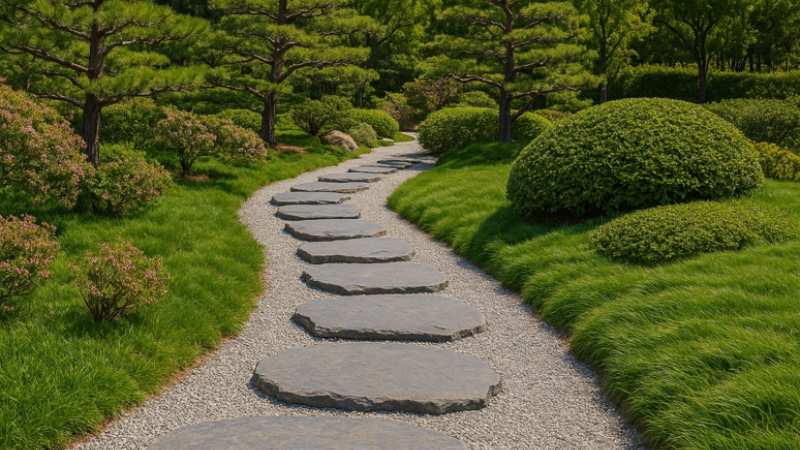
In small gardens, curved stepping stone pathways work especially well. They soften sharp edges, slow the pace as you walk through the space and make compact areas feel longer and more open. Even a narrow side yard can feel intentional and welcoming with the right stepping stone flow.
Trend #2 – Natural Stones Over Manufactured Materials
This year, the shift towards authenticity is stronger than ever. More homeowners are moving away from manufactured paving and choosing natural stones instead, and for good reason.
Natural stones have timelessness, variation, texture, and character. No two pieces look exactly the same, which adds depth and warmth to small gardens. Materials like natural Sandstone paving are especially popular because they blend beautifully with plants, wooden accents and soft landscaping.
Home design experts always recommend natural stones over manufactured materials, simply because they age better, feel better underfoot and don’t date as quickly.
Trend #3 – Fewer Stones, Better Spacing
One of the biggest mistakes in small gardens is overcrowding. In 2026, less is definitely more. Larger stepping stones with thoughtful spacing are replacing busy, tightly packed layouts.
Correct spacing makes the pathway more comfortable to walk on and keeps the garden feeling open. It also helps the stepping stones look purposeful, not decorative for the sake of it.
Trend #4 – Mixing Stones with Greenery
Another reason garden stepping stones are trending is how well they work with soft landscaping. Grass, gravel, pebbles or low-growing ground cover between stones instantly lightens the space.
This approach is especially useful in urban gardens where drainage, heat and maintenance matter. Natural stones paired with greenery feel far more relaxed than wall-to-wall paving.
Where Stepping Stone Pathways Work Best in Urban Homes
In 2026, homeowners are using stepping stones in smarter, more intentional ways, including –
- Front garden entry pathways that feel welcoming without being formal
- Side access pathways that don’t feel like forgotten corridors
- Courtyards where space is limited but style still matters
- Connecting outdoor zones like decks, lawns and seating areas
In each case, stepping stones offer guidance without taking over.
Choosing the Right Stone for Small Gardens
Material choice matters, especially in tight spaces. Natural Sandstone paving is a favourite in urban gardens due to its warm shades, subtle patterns and ability to suit both modern and classic homes. You can also go for Travertine, Limestone, Bluestone or Granite.
Natural stones also handle Australian conditions well. They don’t retain heat the way some manufactured materials do, and they age naturally rather than looking worn out.
That is why, time and again, natural stones prove to be the better long-term choice.
Common Mistakes to Avoid
Even though stepping stones are simple, a few missteps can ruin the look –
- Choosing stones that are too small or too thin
- Overcrowding the path with too many pieces
- Ignoring comfort and stride length
- Mixing too many colours or finishes
Keeping the design calm and intentional is key.
Small Gardens, Smarter Choices
In 2026, small urban gardens are no longer an afterthought. They are carefully designed spaces that prioritise comfort, flow and ease of living. And that is exactly why garden stepping stones are having their moment. By choosing natural stones, keeping layouts simple and letting greenery show its beauty, stepping stone pathways offer a practical, timeless solution for compact outdoor spaces.