
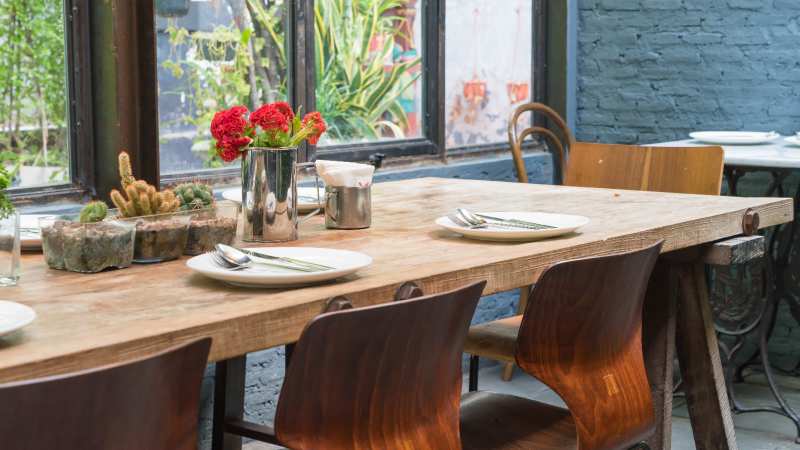
Walk into a restaurant and pause for just a second before you look at the menu. What do you notice first? The lighting. The spacing. The way the chairs feel when you sit down, the texture of the table under your fingertips.
Long before the first bite, the restaurant furniture is already telling you what kind of meal you are about to experience.
In the United States alone, the restaurant industry generates over 900 billion dollars annually. With thousands of new concepts launching each year, design has become one of the most powerful tools for standing out. Cuisine is no longer defined only by flavor or ingredients. It is defined by atmosphere, and furniture plays a leading role in shaping that story.
The Table as a Culinary Signal
Think about a thick, solid wood table with visible grain, knots, and a slightly uneven surface. It feels grounded. Honest. Almost nostalgic.
Now imagine a sleek white quartz surface with razor clean edges and no visible texture. The feeling shifts immediately.
Furniture, especially tables, acts as a visual preview of the food. Rustic farm tables often signal comfort dishes, handmade pasta, smoked meats, or locally sourced ingredients. They create a sense of warmth and heritage. Guests expect hearty portions and bold flavors.
Minimalist tables, on the other hand, suggest precision. They prepare diners for artfully plated dishes, tasting menus, and controlled portion sizes. The design becomes a quiet promise of refinement.
Restaurant operators know this connection. Studies show that nearly 60 percent of diners say ambiance influences their decision to return. The table is not just functional. It is psychological.
Chairs That Shape the Dining Mood
Chairs do more than provide a place to sit. They influence how long people stay, how they interact, and even how much they spend.
Consider these subtle cues:
- Upholstered chairs often encourage longer dining times and higher check averages.
- Hard wooden or metal chairs promote faster turnover and a more casual atmosphere.
- Lounge-style seating increases drink sales and social interaction.
In fine-dining settings, plush chairs with supportive backs convey comfort and exclusivity. Guests feel invited to linger. In fast casual spaces, simpler seating supports efficiency and movement.
Even height matters. Bar height seating creates a social, energetic vibe. Standard dining chairs are often perceived as structured and traditional. A simple design decision can shift the entire rhythm of a space.
Is the cuisine meant to be savored slowly, or shared quickly? The answer often shows up in the chair design.
Rustic Dining and the Power of Texture
Rustic interiors lean heavily on natural materials. Reclaimed wood, wrought iron, distressed finishes. These textures communicate authenticity.
Why does this matter?
Because diners associate texture with storytelling, a weathered table feels like it has history. That emotional cue supports farm-to-table menus, barbecue concepts, or regional specialties.
Research in environmental psychology suggests that natural materials reduce stress and increase feelings of comfort. That emotional comfort can translate directly into brand loyalty.
Rustic furniture also absorbs light differently. It softens the space. It makes imperfections feel intentional. Food presented in this setting often feels generous and soulful.
You are not just eating. You are participating in a narrative about tradition.
Modern Minimalism and Culinary Precision
Minimalism works in a completely different way. It removes distractions.
Smooth surfaces. Clean lines. Neutral color palettes. Everything feels deliberate.
Modern restaurants that embrace minimal furniture often highlight plating as a visual art form. When the surroundings are simple, the food becomes the focal point. This approach is common in high-end sushi bars, contemporary tasting-menu concepts, and chef-driven urban restaurants.
There is data behind this as well. Consumer behavior studies show that uncluttered environments increase perceived product quality. When a dining room feels controlled and intentional, guests subconsciously associate that precision with the kitchen.
Minimalist furniture also allows lighting to play a bigger role. Shadows become sharper. Colors pop more intensely. The cuisine appears elevated.
Fewer furniture details can mean more focus on flavor.
Cultural Identity Through Furniture
Food is integral to culture. Furniture makes that bond stronger.
Light-wood tables, woven chairs, and open spaces that remind you of living on the coast are common in Mediterranean restaurants. Following historical precedent, a Japanese design would incorporate low chairs and natural wood. A gastropub in an industrial style in the U.S. could use metal frames and recycled tops to show its city roots.
These choices about design are not random. They set expectations before the first plate arrives.
When furniture matches cultural clues, it makes diners feel like they are in a real place. When things don’t match up, the experience might be disorienting.
The global market for restaurant design keeps growing, thanks to travelers and social media. Guests today have more things to compare things to. They can tell when a space is real and when it is fake.
Furniture becomes a way to show who you are.
The Instagram Effect on Dining Spaces
Let’s be honest. Social media has changed everything.
More than 70 percent of diners say they have chosen a restaurant based on photos online. And what appears in those photos? The furniture.
Statement chairs. Unique table shapes. Bold textures. Clean minimal backdrops.
Rustic settings photograph as warm and inviting. Modern minimalist interiors photograph as sleek and aspirational. Both can succeed, but only if the furniture supports the cuisine and the brand story.
Restaurants now design with the camera in mind. That means considering angles, spacing, and color contrast. Furniture is no longer background. It is content.
In this environment, design consistency matters more than ever. If the table tells one story and the food tells another, the disconnect becomes visible instantly.
Blending Styles for a New Generation
It’s interesting that a lot of modern restaurants don’t have to pick between rustic and minimal anymore. They mix them together.
A table made of recycled wood and modern metal seats. A single farmhouse table in a pristine white space. This fusion shows how tastes are changing.
People who eat out today value both authenticity and new ideas. Hybrid furniture types let restaurants show that they are both comfortable and creative at the same time.
The outcome is an experience with layers. Familiar but looking ahead.
Furniture remains one of the most versatile ways to shape the dining experience as design trends evolve. It can give a concept a sense of history or move it into the future.
When Furniture Becomes Flavor.
Ultimately, furniture does something remarkable. It shapes perception.
A rustic table can make a simple soup feel homemade. A minimalist setting can turn the same soup into a culinary statement. The ingredients may not change. The environment does.
That is the quiet power of design.
Restaurants compete in a crowded market. Menus can be copied. Recipes can be replicated. But the emotional memory of how a space felt, how the chair supported you, how the table framed your plate, that is harder to duplicate.
Cuisine lives not only on the plate, but in the space around it. And every table, every chair, every design choice plays a part in telling that story.