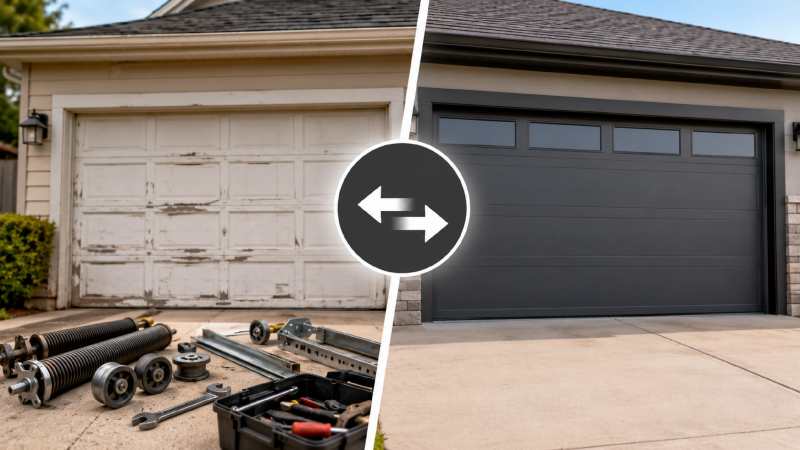
A garage door is more than just an entry point for your vehicle. It improves home security, enhances curb appeal, and protects your belongings from the weather. Like any mechanical system, however, a garage door experiences wear and tear over time. Eventually, every homeowner faces an important question: Should you repair your garage door or replace it entirely?
The answer depends on several factors, including the age of the door, the type of damage, repair costs, safety concerns, and your long-term goals. In some situations, a simple repair can restore the door to perfect working condition. In others, replacing the entire system may be the smarter and more cost-effective option.
This guide explains the costs associated with garage door repairs and replacements, the factors that influence pricing, and how to decide which option offers the best value.
Why Understanding the Costs Matters
Garage door problems can range from a noisy roller to a completely broken spring or damaged panels. Without understanding the potential costs, homeowners may either overspend on unnecessary repairs or replace a door that still has years of useful life.
Comparing repair and replacement costs helps you:
- Make informed financial decisions
- Improve home safety
- Avoid repeated repair bills
- Increase property value
- Extend the life of your garage door system
Understanding your options also allows you to budget more effectively for future maintenance.
Factors That Affect Garage Door Costs
Before comparing repairs and replacements, it is important to understand what influences pricing.
Type of Damage
Minor issues generally cost much less than major structural or mechanical problems.
Examples include:
- Loose hardware
- Worn rollers
- Broken springs
- Bent tracks
- Damaged panels
- Faulty garage door openers
The more complex the issue, the higher the repair cost is likely to be.
Material of the Garage Door
Garage doors are available in different materials, each with its own price range.
Common materials include:
- Steel
- Aluminium
- Wood
- Fibreglass
- Composite
- Vinyl
Wood doors often cost more to repair or replace because of the material and craftsmanship involved.
Size of the Door
Single-car garage doors generally cost less to repair and replace than double-car or oversized doors due to the additional materials and labour required.
Labour Charges
Labour rates vary depending on:
- Location
- Complexity of the repair
- Emergency service requirements
- Experience of the technician
Emergency or after-hours services usually cost more than scheduled appointments.
Age of the Garage Door
Older garage doors may require replacement parts that are difficult to find. If several components have already failed, replacing the entire door may be more practical than continuing to repair it.
Common Garage Door Repair Costs
Repair costs vary depending on the specific issue. Below are the most common repairs homeowners encounter.
Replacing Rollers
Rollers wear down over time, especially with frequent use.
Typical roller replacement involves:
- Removing old rollers
- Installing new ones
- Lubricating moving parts
- Testing door movement
Replacing worn rollers can significantly reduce noise and improve smooth operation.
Spring Replacement
Garage door springs handle the heavy lifting every time the door opens or closes.
Broken springs are among the most common garage door repairs.
Because springs are under high tension, they should always be replaced by trained professionals.
Cable Repairs
Lift cables help balance and support the weight of the garage door.
Signs of cable problems include:
- Frayed wires
- Uneven door movement
- Loose cables
- Door hanging crooked
Cable repairs should never be attempted without proper equipment.
Track Repairs
Garage door tracks guide the rollers throughout the opening and closing process.
Tracks may become:
- Bent
- Misaligned
- Rusted
- Damaged after impact
Minor alignment problems may be repaired, while severely bent tracks often require replacement.
Panel Replacement
Sometimes only one garage door panel becomes damaged.
Common causes include:
- Vehicle impact
- Severe weather
- Dents
- Cracks
Replacing a single panel is often less expensive than replacing the entire door if matching panels are available.
Garage Door Opener Repairs
Modern openers contain motors, gears, sensors, and electronic controls.
Repairs may involve:
- Replacing remote controls
- Repairing safety sensors
- Fixing drive systems
- Replacing circuit boards
Older openers may be better replaced than repaired if parts are no longer available.
When Repairing Your Garage Door Makes Sense
Repairing is often the best choice when the damage is limited and the door remains structurally sound.
Repairs are usually worthwhile if:
- The garage door is less than 10 years old.
- Only one or two components are damaged.
- The repair cost is relatively low.
- The door still operates safely.
- Replacement parts are easy to find.
- The overall appearance remains good.
Routine repairs can often extend the life of a quality garage door by several years.
When Replacement Is the Better Investment
Although repairs may seem less expensive initially, replacing the garage door sometimes saves more money over time.
Replacement is worth considering when:
- The door is more than 15 to 20 years old.
- Multiple components have failed.
- The door has severe structural damage.
- Repair costs continue to increase.
- The door lacks modern safety features.
- You want better insulation or energy efficiency.
- You are improving your home’s appearance before selling.
A new garage door may also reduce maintenance costs and provide more reliable performance.
Comparing Repair and Replacement Costs
The choice between repair and replacement often comes down to long-term value rather than the initial expense.
Repair Advantages
- Lower upfront cost
- Faster completion
- Minimal disruption
- Extends the life of the existing door
- Ideal for minor mechanical problems
Repair Disadvantages
- Older parts may continue to wear out.
- Frequent repairs can become expensive.
- Matching replacement panels may not be available.
- Older doors may still lack energy efficiency.
Replacement Advantages
- Brand-new components
- Improved reliability
- Better insulation
- Enhanced security
- Increased kerb appeal
- Modern safety features
- Manufacturer warranties
Replacement Disadvantages
- Higher initial investment
- Longer installation time
- Greater upfront expense
Although replacement costs more initially, it may reduce repair bills for many years.
The 50 Percent Rule
Many homeowners use a simple guideline known as the 50 percent rule.
If repairing the garage door costs more than half the price of a new door, replacement is often the better financial decision.
For example:
- If repairs cost £700 and a comparable new garage door costs £1,200, replacing the door may provide better long-term value.
This rule is not absolute, but it is a useful starting point when comparing options.
Hidden Costs to Consider
The visible repair bill is not the only expense homeowners should consider.
Hidden costs may include:
- Repeated service visits
- Emergency repair charges
- Reduced energy efficiency
- Increased heating or cooling costs
- Lower property value
- Future component failures
Replacing an ageing garage door may eliminate many of these ongoing expenses.
Energy Efficiency and Long-Term Savings
Modern insulated garage doors can improve energy efficiency, especially if the garage is attached to the home.
Benefits include:
- Reduced heat loss
- Improved indoor comfort
- Lower energy consumption
- Better temperature control
- Less outside noise
While insulation increases the purchase price, it may lead to savings on energy bills over time.
Safety Considerations
Older garage doors may not include modern safety features.
New garage door systems often provide:
- Improved auto-reverse technology
- Better photo-eye sensors
- Stronger locking systems
- Enhanced wind resistance
- Safer spring designs
If safety is a concern, replacement may be the better option.
How Maintenance Can Reduce Costs
Regular maintenance helps prevent expensive repairs and extends the life of your garage door.
Simple maintenance tasks include:
- Lubricating moving parts
- Tightening loose hardware
- Cleaning the tracks
- Testing safety sensors
- Checking the balance
- Inspecting weather seals
- Looking for worn rollers and cables
Preventive care often costs far less than emergency repairs.
Questions to Ask Before Deciding
Before choosing repair or replacement, ask yourself:
- How old is the garage door?
- Is the damage cosmetic or structural?
- Have I needed several repairs recently?
- Does the door still operate safely?
- Are replacement parts readily available?
- Will a new door improve energy efficiency?
- Am I planning to sell my home soon?
Answering these questions can help you make a practical and cost-effective decision.
Tips for Saving Money
Whether you repair or replace your garage door, these tips can help reduce costs:
- Schedule regular maintenance.
- Address small problems early.
- Compare quotes from qualified professionals.
- Avoid delaying necessary repairs.
- Choose quality replacement parts.
- Keep the tracks and rollers clean.
- Test safety features regularly.
Taking care of your garage door can help prevent unexpected expenses in the future.
Frequently Asked Questions
Is repairing a garage door always cheaper than replacing it?
Not always. While repairs usually have a lower upfront cost, frequent repairs on an older door can eventually cost more than installing a new one.
How long does a garage door usually last?
A well-maintained garage door can last between 15 and 30 years, depending on its material, usage, and maintenance.
Can I replace only one damaged panel?
Yes, if matching panels are available and the rest of the door is in good condition. However, if the damage is extensive or replacement panels are no longer manufactured, replacing the entire door may be a better option.
Should I repair a broken garage door spring myself?
No. Garage door springs are under significant tension and can cause serious injuries if handled incorrectly. Spring repairs should always be carried out by trained professionals.
Does a new garage door increase home value?
Yes. A modern garage door can improve kerb appeal, enhance security, and increase the overall value of your property, making it an attractive upgrade for many homeowners.
Conclusion
Deciding between garage door repair and replacement is not always straightforward. The best choice depends on the age of the door, the extent of the damage, repair history, safety, and your long-term plans for the property. Minor issues such as worn rollers, loose hardware, or faulty sensors can often be repaired quickly and affordably. However, if your garage door is ageing, frequently breaks down, or requires costly repairs, replacing it may provide better value and peace of mind.
By weighing the immediate costs against the long-term benefits, you can make a decision that suits both your budget and your home’s needs. Regular maintenance, prompt attention to small problems, and professional inspections when necessary will help keep your garage door operating safely and efficiently for many years.